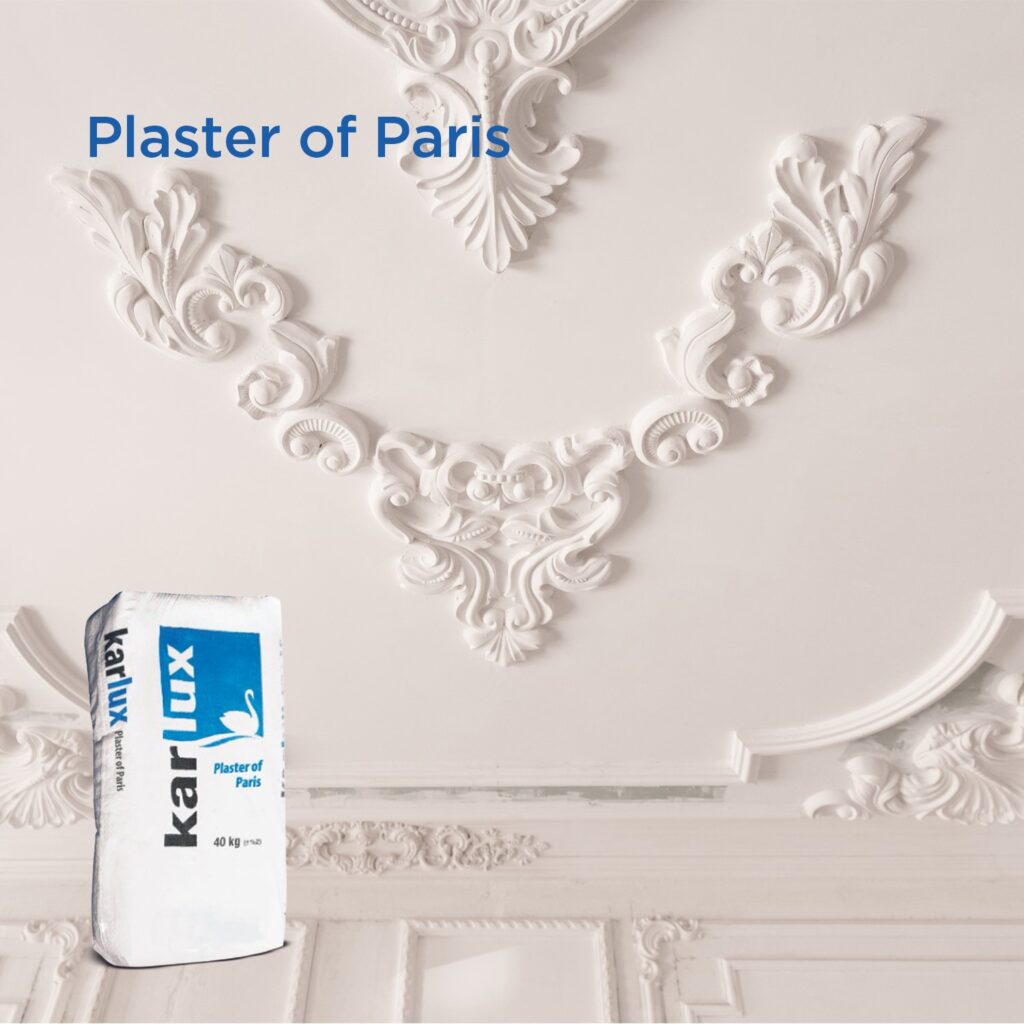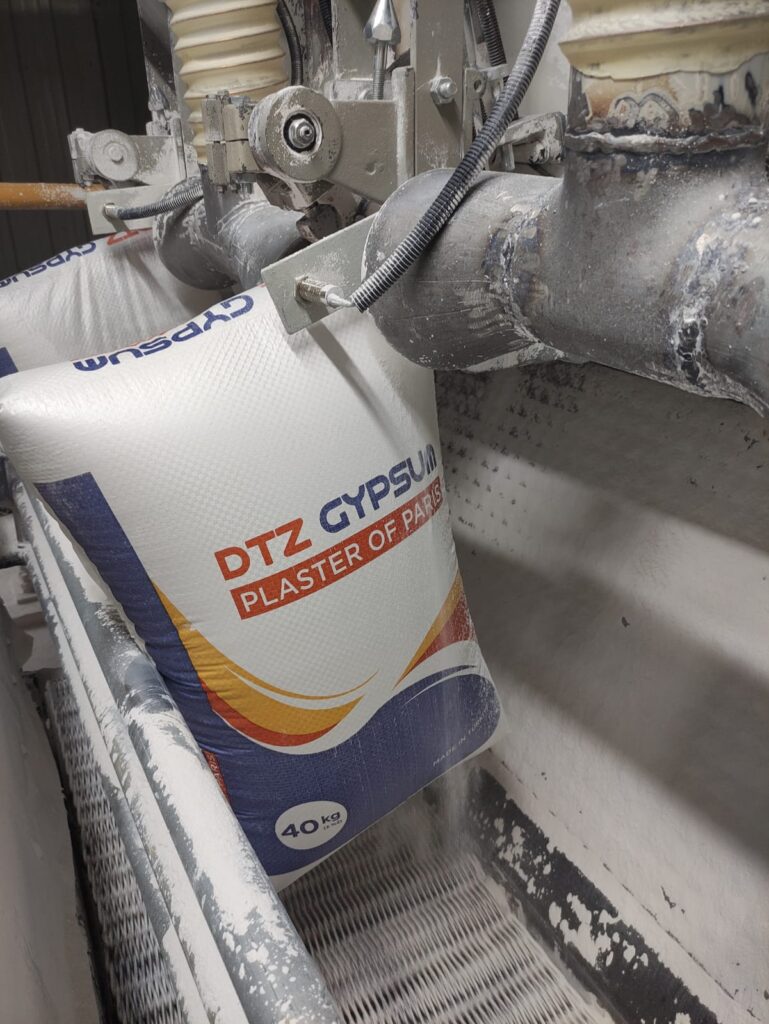
Plaster of Paris (POP) is a popular material used in construction and art, primarily for plastering walls, creating decorative moldings, and even crafting sculptures. Its versatile nature and ability to set quickly make it a go-to choice for many applications. But have you ever wondered what exactly goes into making POP cement?
In this blog, we’ll delve into the raw materials used in the production of Plaster of Paris and how it is made.
Raw Materials for Plaster of Paris (POP)
The primary raw material for POP is gypsum, a naturally occurring mineral. Let’s break down the components involved:
- Gypsum (Calcium Sulfate Dihydrate) The key ingredient in Plaster of Paris is gypsum (chemical formula: CaSO₄·2H₂O), a soft sulfate mineral. Gypsum is abundant and easy to obtain, making it an ideal choice for creating plaster. When gypsum is heated, it undergoes a chemical reaction, transforming into Plaster of Paris. This is because the heating process drives off the water molecules bound within the gypsum crystal structure, converting it into a fine powder.Gypsum Characteristics:
- White or Off-White Color: Fresh gypsum has a white appearance, which gives POP its characteristic color.
- Softness: It’s a soft mineral, which makes it easy to grind and process.
- Hydration Properties: Gypsum can absorb water, making it an excellent material for plastering.
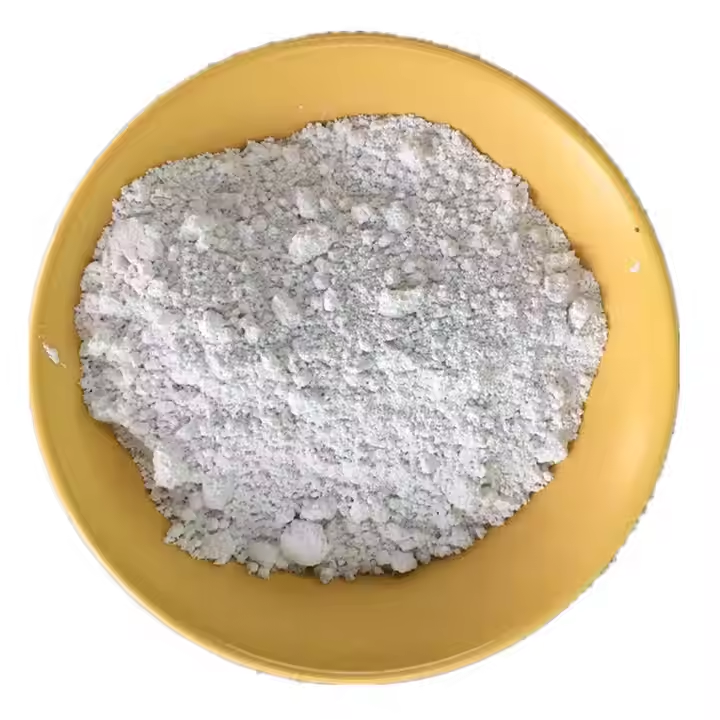
- Heating Process (Calcination) The process of turning gypsum into Plaster of Paris is known as calcination. During calcination, gypsum is heated to temperatures between 150°C to 180°C (302°F to 356°F). This process drives off water molecules, leaving behind a fine, dry powder known as Plaster of Paris (chemical formula: CaSO₄·½H₂O).Heating Process Details:
- When gypsum is heated, it loses about 75% of its water content.
- The resulting product, Plaster of Paris, is highly absorbent and can quickly rehydrate when mixed with water, al
- Additives and Modifiers (Optional) In some cases, additives and modifiersPlaster of Paris to enhance its properties for specific applications. These can include:
- Retarders: Chemicals added to slow down the setting time, allowing for more worki
- Accelerators: Added to speed up the setting time, which is usefu
- Binders and Fillers: Used to adjust the texture and improve adhesion. These may include materials like sand or lime, depending on the int
- Colorants: Pigments are sometimes added to POP to create colored plaster fo
- Water Water is a crucial component when preparing **Plaster of PariPlaster of Paris. When mixed with the dry powder, the water reactivates the plaster, causing it to harden into a solid form. The ratio of water to Plaster of Paris will affect the final consistency, working time, and strength of the plaster.
Summary of Raw Materials
- Gypsum (CaSO₄·2H₂O): The primary material for creating Plaster of Paris.
- Heat: Used to remove the water from gypsum during the calcination process, transforming it into POP.
- Additives: Various chemicals may be used to modify the properties of POP for specific purposes (e.g., retarders, accelerators, fillers).
- Water: Essential for rehydrating the POP powder and allowing it to set and harden.
Conclusion
The main raw material for Plaster of Paris is gypsum, which, when heated and processed, transforms into the fine powder used in construction, art, and repairs. The heating (calcination) process removes water from gypsum, creating POP, which can then be mixed with water to create a paste that hardens quickly. Additives may be used to tailor the plaster for specific applications, but gypsum remains the foundational ingredient in POP cement production.