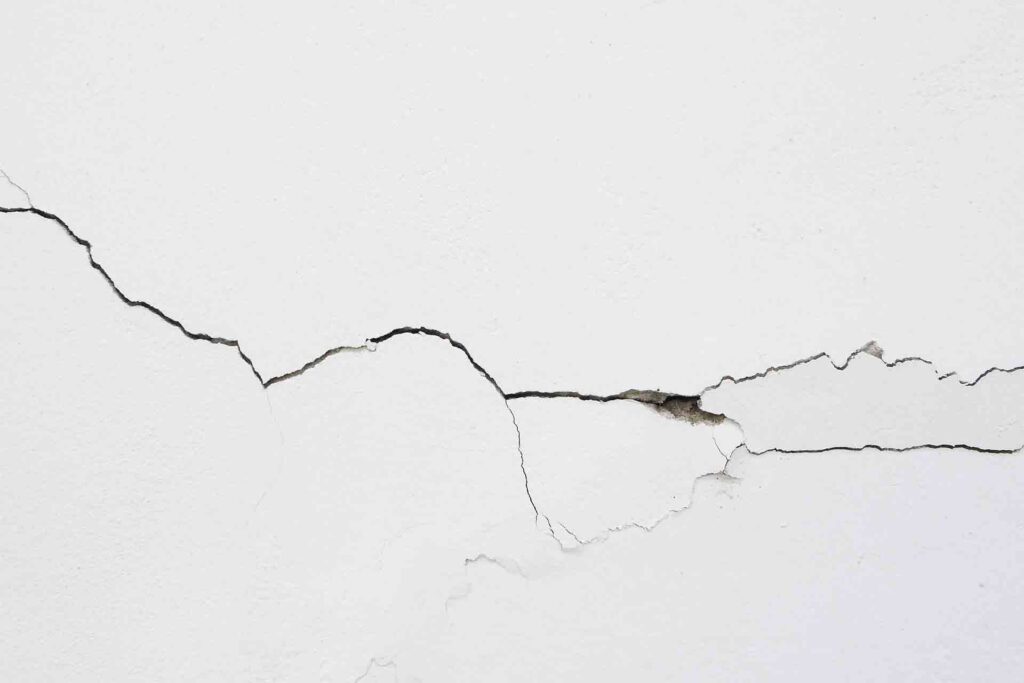
Cracks in walls, floors, or ceilings can occur due to various reasons, including shifting foundations, moisture exposure, or general wear and tear. Whether the cracks are small or large, repairing them promptly is essential to maintain the integrity and aesthetic of your property. The type of cement or repair material you choose plays a crucial role in ensuring a long-lasting and effective repair.
In this blog, we will explore the best cement options for filling cracks and offer some tips on choosing the right material for your specific needs.
Types of Cement for Crack Repair
- Ordinary Portland Cement (OPC)Ordinary Portland Cement (OPC) is the most commonly used type of cement for construction. It’s strong, versatile, and suitable for a variety of applications, including filling cracks in walls or floors. OPC is best used for:
- Large cracks or gaps that require significant filling.
- General repair work in both indoor and outdoor areas.
- Concrete cracks or cracks in plastered surfaces.
- Strong and durable.
- Readily available and affordable.
- Provides a solid bond when mixed with water and sand.
- Requires a bonding agent or admixture for better adhesion on smooth surfaces.
- May take longer to set compared to specialized crack fillers.
- Rapid-Setting CementRapid-setting cement is designed for quick repairs, making it ideal for fixing cracks that need immediate attention. This type of cement is available in various formulations, such as quick-setting repair cements and patching compounds. These products are specifically designed for filling cracks in walls, floors, and even driveways.Advantages:
- Sets quickly, often in as little as 15 to 30 minutes.
- Ideal for areas that need immediate use or for small, localized repairs.
- Good for filling cracks in outdoor areas exposed to the elements.
- May not be suitable for large cracks that need deeper filling.
- Requires careful application due to its fast setting time.
- Polymer-Modified CementPolymer-modified cement is an upgraded version of traditional cement, where polymers are added to enhance its properties. This type of cement is highly effective for crack repair because it provides better adhesion, flexibility, and resistance to moisture.Advantages:
- Excellent for cracks in walls, floors, and concrete surfaces.
- Offers enhanced flexibility, making it less likely to crack over time.
- Superior adhesion to both smooth and rough surfaces.
- More expensive than traditional OPC.
- May require specific preparation and mixing.
- Epoxy Resin CementEpoxy resin cement is a high-strength bonding material that is ideal for filling deep cracks in concrete surfaces, particularly those exposed to heavy loads. It combines the properties of epoxy resin with cement, resulting in a flexible yet durable repair solution.Advantages:
- Forms a strong bond with concrete and other materials.
- Resistant to moisture, chemicals, and wear.
- Ideal for structural repairs in heavy-duty areas like driveways, basements, or industrial floors.
- More expensive than standard cement-based products.
- Requires careful mixing and application.
- Flexible Crack Filler Cement For cracks in concrete or masonry surfaces that experience movement or shifting (due to expansion, contraction, or temperature changes), flexible crack filler cement is a great option. These products contain a mixture of polymer resins and cement, providing the flexibility needed to absorb movement without cracking again.Advantages:
- Ideal for cracks in expansion joints, driveways, or pavement.
- Offers long-lasting flexibility to prevent future cracks.
- Can withstand temperature fluctuations and other stress factors.
- May not provide as strong a bond for cosmetic repairs as other cement types.
- Often more expensive due to the polymer content.
Choosing the Best Cement for Cracks
When selecting the best cement for cracks, consider the following factors:
- Size of the Crack:
- For small cracks, a simple rapid-setting cement or polymer-modified cement may suffice.
- For larger cracks, you might need epoxy resin cement or OPC for deeper, more structural repairs.
- Location:
- Interior cracks can generally be repaired with OPC or polymer-modified cement.
- For outdoor cracks exposed to moisture, use flexible crack fillers or epoxy resin cement to ensure the repair withstands the elements.
- Type of Surface:
- If you’re repairing concrete, choose a cement that bonds well with this material, such as epoxy resin or polymer-modified cement.
- For plaster or drywall, rapid-setting cement or OPC is typically more effective for filling cracks.
- Setting Time:
- If you need a quick repair, opt for rapid-setting cement that cures quickly and allows for fast use.
- If time isn’t an issue, OPC or polymer-modified cement will offer a more durable solution.
- Durability and Strength:
- For high-traffic areas, or areas exposed to heavy loads, epoxy resin cement or polymer-modified cement is more suitable due to its added strength and flexibility.
Conclusion
There is no single “best” cement for cracks, as the ideal choice depends on the specific nature of the crack, the surface material, and the environment. However, epoxy resin cement and polymer-modified cement are among the best options for structural integrity, while rapid-setting cement and OPC are excellent for smaller, less demanding repairs. Always consider the size, location, and type of crack when making your decision to ensure the best and most durable repair.