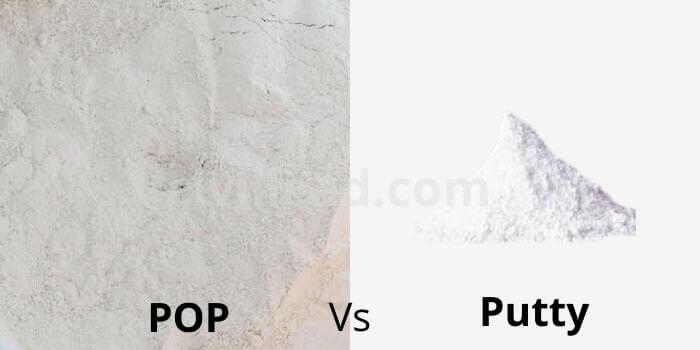
Plaster of Paris (POP) and putty are both materials commonly used in construction and decorative applications, but they have distinct characteristics, uses, and composition. Understanding the differences between the two can help you choose the right material for your specific needs. In this blog, we will explore the key differences between POP and putty.
1. Composition
- POP (Plaster of Paris):
- Main Ingredient: Gypsum (calcium sulfate dihydrate) is the primary raw material used to create Plaster of Paris. It is produced by heating gypsum to a specific temperature, which removes water from the mineral, turning it into a fine powder.
- Chemical Composition: CaSO₄·½H₂O (Calcium Sulfate Hemihydrate).
- Putty:
- Main Ingredient: Putty can be made from a variety of materials, including gypsum, lime, cement, and oil-based compounds. The exact composition depends on the type of putty (e.g., wall putty, wood putty, cement putty).
- Common Composition: Wall putty often consists of white cement, chalk, and binder materials.
2. Purpose and Use
- POP:
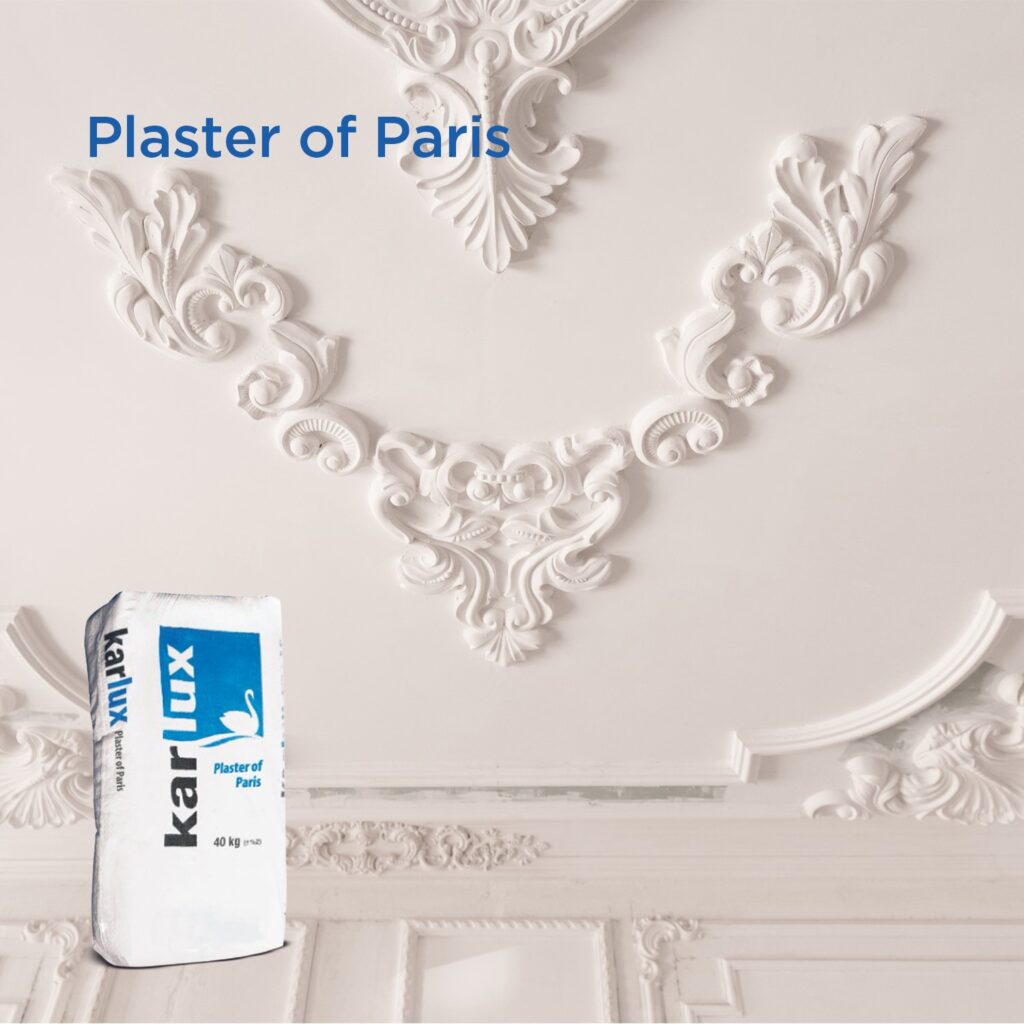
- Primary Use: Plaster of Paris is primarily used for plastering walls and ceilings in both interior and exterior applications. It is used to cover large areas and is excellent for decorative moldings and design work.
- Additional Uses: POP is also commonly used in casting, sculpting, and repairing surfaces due to its smooth finish and ability to harden quickly.
- Putty:
- Primary Use: Putty is mainly used for filling gaps, cracks, and holes in surfaces such as walls, wood, or metal. It can also be used as a surface preparation for painting.
- Additional Uses: Putty is often used in woodworking (wood putty), window glazing, and filling holes before applying paint.
3. Properties
- POP:
- Hardness: Once dry, POP is a hard material that creates a durable surface, making it ideal for plastering and decorative applications.
- Setting Time: POP sets quickly, usually within 10 to 15 minutes, but the exact time depends on the water-to-POP ratio and environmental conditions.
- Finish: It provides a smooth, hard finish, making it excellent for creating a solid base for further treatments like painting or texturing.
- Putty:
- Softness: Putty remains soft and malleable even after drying, making it suitable for filling small imperfections in surfaces.
- Setting Time: Putty typically has a slower setting time, and its drying time depends on the type of putty used. For example, wall putty may take 2 to 4 hours to dry, while wood putty can take longer.
- Finish: Putty leaves a smoother surface, especially when used for filling small gaps and preparing surfaces for paint or varnish.
4. Application Process
- POP:
- Preparation: POP is mixed with water to form a paste and applied directly to surfaces such as walls, ceilings, and molds. It is usually applied in multiple layers to achieve the desired thickness and finish.
- Drying: After application, POP hardens into a solid surface. It should be smoothed with a trowel or other finishing tools to create a polished appearance.
- Putty:
- Preparation: Putty is also mixed with water or applied directly from the tub, depending on the type. For wood putty, it may come in a pre-made form, while wall putty often requires mixing with water.
- Application: Putty is applied using a putty knife or spatula to fill in cracks, gaps, or holes. After application, it is smoothed over and left to dry.
5. Cost
- POP: Generally, POP is less expensive than putty due to its simple composition. It is widely available and used for large-scale plastering projects, making it a cost-effective option for wall and ceiling finishing.
- Putty: Putty can be more expensive than POP depending on the type and intended application (e.g., wood putty or specialized wall putty). It is often used in smaller quantities and for more specific tasks like surface filling and finishing.
6. Durability and Finish
- POP:
- Durability: POP is durable and long-lasting once applied. It provides a strong surface for interior plastering but may not be suitable for outdoor applications unless combined with additives for moisture resistance.
- Finish: The finish is hard, smooth, and provides a base for further decoration such as painting, tiling, or decorative molding.
- Putty:
- Durability: Putty is designed for filling and smoothing and is not intended to be exposed to wear and tear. While it offers a smooth finish, it may not be as durable as POP in heavy-duty applications.
- Finish: Putty gives a smooth and fine finish, making it ideal for preparing surfaces for paint. However, it does not provide the same structural integrity as Plaster of Paris.
Summary of Differences
| Feature | POP (Plaster of Paris) | Putty |
|---|---|---|
| Main Ingredient | Gypsum (CaSO₄·2H₂O) | White Cement, Chalk, Oil-based Compounds |
| Primary Use | Plastering walls, ceilings, and decorative moldings | Filling cracks, holes, and gaps |
| Properties | Hard, smooth finish, fast-setting | Soft, malleable, slower-setting |
| Application | Applied in layers for coverage | Applied to fill imperfections or for surface preparation |
| Durability | Strong and durable when dry | Less durable, used for surface smoothing |
| Cost | More affordable for large-scale applications | May be more expensive for specialized uses |
Conclusion
While both POP and putty are essential materials in construction and decorative work, they serve different purposes. Plaster of Paris is ideal for large-scale plastering, providing a hard, durable finish, while putty is used primarily for filling gaps and smoothing surfaces. Choosing the right material depends on the application—whether you need a structural finish (POP) or a smooth, preparatory surface (putty). Understanding these differences ensures that your project is completed with the right material for the desired result.